Nice - a word and a place
"By 1926, nice was said to be "too great a favorite with the ladies, who have charmed out of it all its individuality and converted it into a mere diffuser of vague and mild agreeableness." [Fowler]/Etymonline

I have no idea now where my inspiration for this post came from, but I think it began with the word rather than the place - very different things - and yet, maybe that quote is indeed apt. for both of them. We shall see.
Above is my very last sight of la belle France, from the cabin of the plane taking off from Nice airport with a view of some of the town's outskirts along the coast. It's not a great photograph, and yet it is a significant one for me. And not a nice one really in every way. Although the view gets worse as you travel eastwards - it's virtually wall to wall concrete into Italy and beyond. Along the actual coastline anyway.
I have never actually been to Nice. Well I have been to its airport - both in and out - a few times, I have picked somebody up at Nice train station once - a little hair-raising - thank goodness for GPS - I have driven along the Promenade des Anglais on the way to a couple of days further along the Riviera, although I didn't really see it as we were arguing about where we were going and David was coming to grips with the car we had just picked up at the airport, and driving on the right. I have whizzed past it along La Provençale that takes you into Italy, to which Nice used to belong, but I have never spent time in its centre.

So let me start with the place rather than the word. The painting is irrelevant really, but I found it, it's by Chagall, and yes - it's rather nice.
As I shall be talking about words in a little while, let me begin with the name of the town which is from a different source to the adjective:
"Nice was probably founded around 350 BC by colonists from the Greek city of Phocaea in western Anatolia. It was given the name of Níkaia (Νίκαια) in honour of a victory over the neighbouring Ligurians. " Wikipedia
Nike is the Greek Goddess of victory by the way - which is why Nike is Nike. But it's a hard K not a soft c - so I don't really know how it came to be the current day soft c. Although now that I think of it, I don't think the French language includes the letter K.
I'm pretty sure my starting place for this post was the word not the place, but neverthless I seem to find myself in Nice, which has spent more of its history in the hands of the Savoyards, Italians, Sardinians, Sicilians and others than in the hands of the French. It wasn't until !860 that it was finally given back to the French (who had previously had it for a short time). For centuries the official language was Italian, and hence the dialect spoken by its inhabitants has a very distinct Italian lilt together with Italianate words. And it's food of course has a huge Italian influence.
When I turned to Nice as a place I grabbed one of my favourite Robert Carrier books - Feasts of Provence - from my shelf because I knew he had a whole chapter on Nice. So here is a brief glimpse of the top Niçois dishes. All of them deserve posts to themselves, and some of them have indeed had them - this is just a brief rundown.

Pan Bagnat - I'm beginning with Pan bagnat because I just love this photograph which is from his book. Pan bagnat is, as you can see, a huge sandwich and here is his description of its evolution:
"Originally pan bagnat was a combination of cold soup and salad, in which stale bread, cut or broken into bits, was incorporated 1 hour before serving into a salad of lettuce, tomatoes, green peppers, sweet onions, anchovies and black olives. The bread soaked up all the juices of the salad and was a delicious way of using up left-overs in a poor society. It was not long before hard-working farm wives and mothers, wanting to make these bread and salad snacks more portable for their menfolk and children to take to work or school, packed them tidily between two halves of a round loaf. And pan bagnat was born."
Pan bagnat, since we are talking of words here and there, literally means soaked bread.
Salade Niçoise
Elsewhere in his introduction he describes pan bagnat as "salade niçoise caught practically between two thick rounds of country bread." And I'm sure we have all eaten and very probably made a Salade Niçoise or two now and then. The pictures above are Robert Carrier's on the left and a more modern but very similar version from David Lebovitz who tells us that:
"A true Niçoise Salad only has raw vegetables. It can have anchovies or canned tuna, but never both, and neither is required. (Grilled tuna is another no-no.) The only thing cooked on the salad are hard-boiled eggs."
Although he hastens to add that he is not a fan of the 'authentic' police.
One thing that does appear in both of those dishes - and many more Niçois dishes besides - are Niçois olives which are black and large. Well that's how I remember them - although I also remember them wrinkly. I saw them described as the champions of French olives however, and they are specifically Niçois because they come from a local kind of olive tree called the Cailletier.
Pissaladière
I know I have written about this wonderful dish before, and I've even made it a few times - once from Richard Olney's recipe not online) - the one on the right. The other two are - on the left a really traditional version which uses pissalat - a fermented anchovy paste instead of the usual criss-cross pattern of anchovies that we usually see. The middle version - a middle way as well - is from Gourmet Traveller's Lisa Featherby I think the base is 'authentically' an olive oil yeasted dough, covered with almost caramelised onions and black olives - the anchovy paste is combined with the onions. But many use shortcrust and other things. There are no tomatoes in pissaladière, which is not to say that they are not a really nice thing to add - peppers too - but then it's not technically pissaladière. And yes - it's a kind of pizza - but then Italy is just down the road. Now - it used to be Here.
Socca
This is Nice's favourite street food - very similar to the Italian farinata - about which I have written. It's a simple, chick-pea flour almost crêpe which is finished in the oven - well not always I think. I think some may just be fried. Thicker than a crêpe, thinner than a pizza and flavoured only with salt and pepper and possibly some herbs. Pieces are cut off and consumed as is.
Panisses
Similar to polenta chips but the flour is the same chick-pea flour that is used for the socca. There is no cheese - like the socca it is sparsely flavoured with salt and pepper and possibly a herb. David Lebovitz whose panisses are shown on the left together with a traditional glass of rosé wine with an ice cube or two, takes you through the process and the traditions. The main tradition here is that the dough is left to thicken in a saucer, and when set it is sliced into lengths, which, because of their origin, vary in shape. Today most people just leave the dough to set in a baking tray before cutting into chips.
There are of course, other Niçois foods, but these are the main ones.
However, personally perhaps, I began all this whilst pondering on the word 'nice' - I don't know why - which in these days has a rather negative meaning.
"pleasant, enjoyable or satisfactory" says the Cambridge English Dictionary with a faint air of superiority - or - its other meaning - "slightly different" - in the sense of 'a nice distinction'
I distinctly remember my English grammar teacher from way back telling us that we should never, ever, use the word 'nice' in our writings because it was a nothing kind of word. I can see her now with her nest of grey hair, and my almost shock at this directive. I know that her advice is still relevant to teachers of writing, but I do wonder why.
So I began by looking it up on Etymonline - a website I find to be really enlightening when it comes to the origin of words. Here is its first statement, which describes where it comes from:
"late 13c., in reference to persons, "foolish, ignorant, frivolous, senseless," from Old French nice (12c.) "careless, clumsy; weak; poor, needy; simple, stupid, silly, foolish," from Latin nescius "ignorant, unaware," literally "not-knowing," from ne-"not"
They then go on to say:
"The sense development has been extraordinary, even for an adj." [Weekley] — from "foolish" to "timid, faint-hearted" (pre-1300), to "fussy, fastidious" (late 14c.), to "dainty, delicate" (c. 1400), to "precise, careful" (1500s, preserved in such terms as nice distinction and nice and early); to "agreeable, delightful" (1769), to "kind, thoughtful" (1830).
I could add here - and probably sort of should - this from Urban Dictionary - excuse the expletive:
"That word you use when you really don’t fucking care about what was just said but want to say something anyways. - “...and that’s how I ended up saving the economy as well as the president of Luxembourg.” “Nice.”"
There are lots of definitions in Urban Dictionary - one of them was 'talented' - as in "That kid down at the park is a nice ballplayer." Language changes all the time as we know - and at an ever increasing pace it seems.
But what I really wanted to say has more to do with this - a quote from Jane Austen on the Etymonline site:
"I am sure," cried Catherine, "I did not mean to say anything wrong; but it is a nice book, and why should I not call it so?" "Very true," said Henry, "and this is a very nice day, and we are taking a very nice walk; and you are two very nice young ladies. Oh! It is a very nice word indeed! It does for everything." [Jane Austen, "Northanger Abbey," 1803]
I mean, like Catherine, I want to ask, what's wrong with using the word nice? Some things are indeed 'nice'. For me it may indeed not mean exciting, or captivating or any other superlative you may like to apply to something you see, or hear, read, or experience, but it means much more than nothing - even alright - and certainly not something to be mocked or despised. It's like a big hug of a word. A nice day is a day that has turned out well, something, however trivial, has been achieved, and has ended with a quiet sense of satisfaction. There has been no stress. There has been no anger, sadness or disagreement. How life perhaps should really be.
And did you notice in that opening quote that it's women - who it is implied - aspire to mediocrity - who are responsible:
"too great a favorite with the ladies, who have charmed out of it all its individuality and converted it into a mere diffuser of vague and mild agreeableness." [Fowler]/Etymonline
What's wrong with vague and mild agreeableness? I'm tempted to say. Yes, of course, we all want joy, beauty, love, a bit of excitement and beauty in our lives, otherwise we would die of boredom. Well not die, but you know what I mean. However, sometimes nice will very much do - and being nice - niceness - is a definite quality of which there should be more. Individuality is not always, indeed mostly, not a good thing.
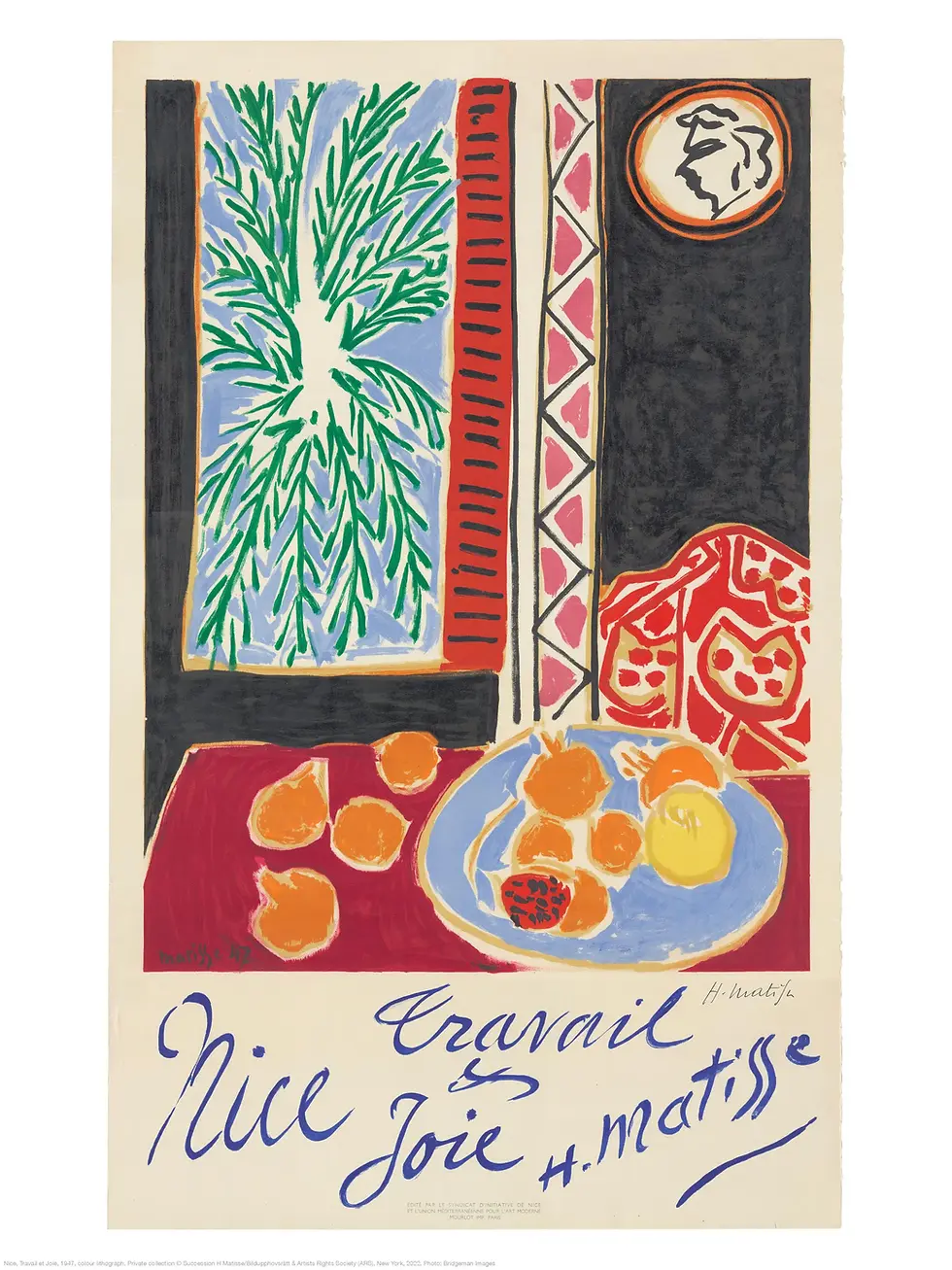
And in a roundabout way some of those thoughts might also apply to Nice the place. To the casual eye it is not nice - wall to wall concrete, excess tourism and everything that goes with a big city - for it is a big city. Some of its real beauty is still there I'm sure, but I'm also sure that there are also small corners that are just - well - nice.
YEARS GONE BY
May 27
2025 - Genteel eggs
2024 - Nothing
2023 - Why don't they cook?
2022 - Plain is yummy - two tarts
2021 - Missing
2020 - Missing
2017 - Nothing


Comments