Vadouvan - will 2026 be its time?
"Imitation is the sincerest form of flattery that mediocrity can pay to greatness." [not] Oscar Wilde
I'll begin with an aside - the quote above. First I just used the first half of it which I had a feeling was by Oscar Wilde, then I found Terence Eden's Blog which first reminded me that there was a second part of it and then told me in great detail why it wasn't Oscar Wilde who said it - the conclusion being it might have been a now defunct magazine - My Family Magazine - in 2002. Who knows really but interesting in a linguistical kind of way. Why I used it will, I hope, eventually become clear.
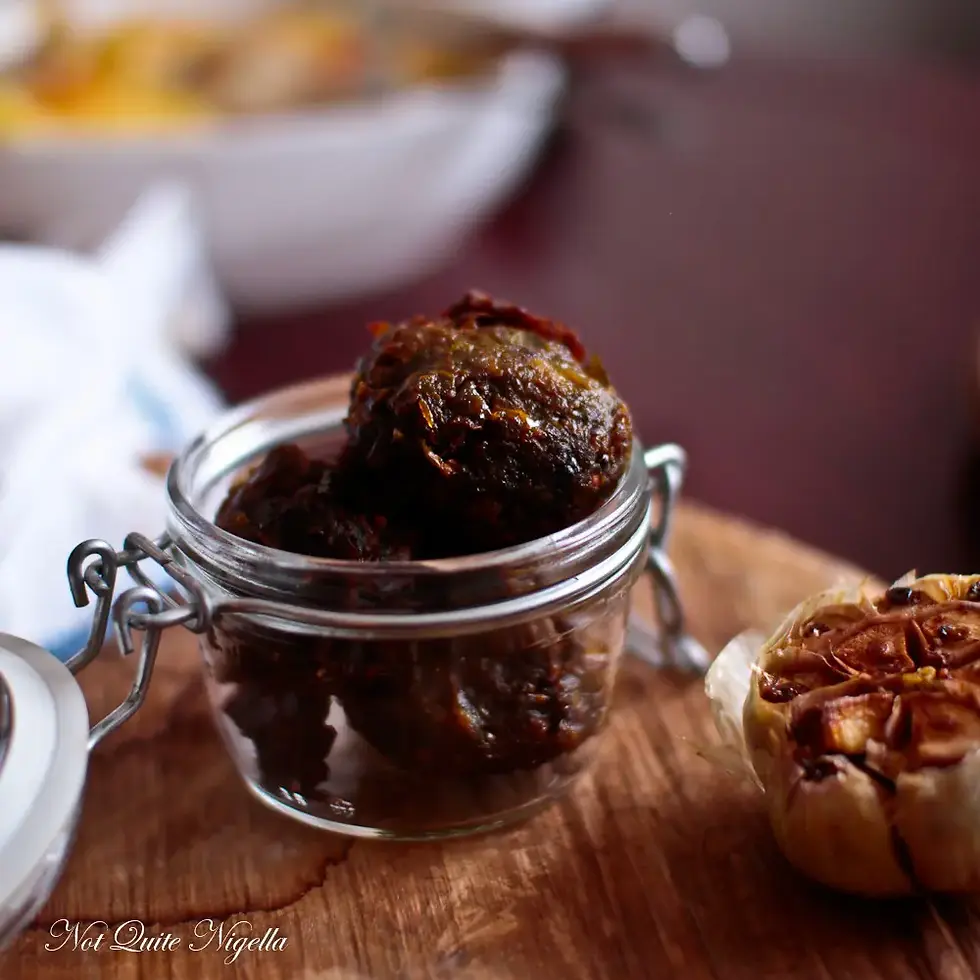
In the meantime - this is Lorraine Elliott's (Not Quite Nigella) version of Vadouvan spice mix and probably the closest to the 'original' in this case. Coincidence - 'not quite' Nigella - a sort of connection to imitation being the sincerest form of flattery. Though Lorraine Elliott is by no means mediocre. And neither is vadouvan by all accounts.

I digress. This is, I think, where I first came across vadouvan - in Helen Goh's recipe for Carrot and vadouvan quick-bread in the latest book Comfort from the Ottolenghi stable. I have pondered on making this a few times. In the recipe which is not online - you will have to buy the book - and you should - it just lists vadouvan and tells us that it is 'becoming increasingly available' but that you can use Madras curry powder instead. Which is interesting because I see that Ottolenghi the company, now has their own blend that you can buy - I'm not sure whether Woolworths has that one in their Ottolenghi selection. But yes, you can buy vadouvan spice blends online but not in your supermarket - and maybe Indian shops?
But never fear there are also a number of recipes online - the two I picked out were Vadouvan curry powder from Dany Valent (Australia) and Vadouvan - Max Falkowitz/Serious Eats (America)
As you can see they look different from each other. Well that's the way with spice mixes isn't it?

In India - well the French colonial part of it around Pondicherry - it's mostly not a spice blend, but a complicated mix of shallots, garlic, rock salt and curry leaves, plus a complicated list of spices that generally includes fenugreek, mixed together, moulded into balls with castor oil and then dried in the sun. Marginally fermented I guess which preserves them. Then the savoury balls are added to whatever they are cooking at the time. Lorraine Elliott's rather delectable looking balls at the top of the page do not include castor oil and are not dried in the sun - the oven does that work. It's a bit of a faff, as she says, and she did try a recipe for the dry mix but says:
"I found that the wet balls with gently cooked down eschallots and garlic were absolutely miles ahead in flavour than the dry spice mix. That's the bad news. In fact I was a bit disappointed that the dry mix was so different because the balls were quite a bit of work and I was hoping to short cut them. Now I treat them like precious balls of flavoursome goodness."
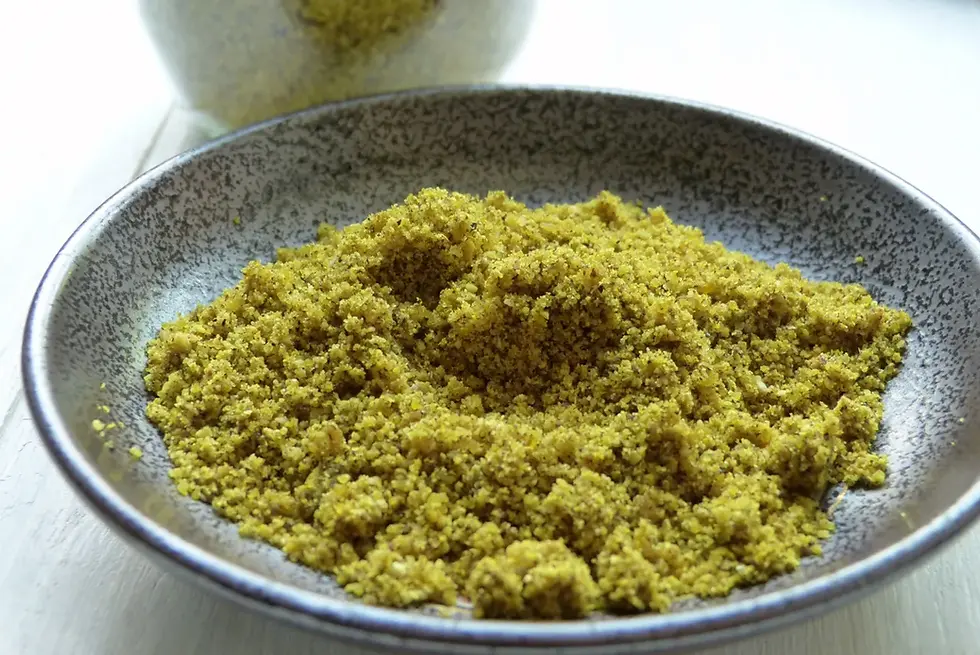
So if you can be bothered go with that. Or if you want to be marginally more authentic you could try Tessa Kiros's recipe from her book Provence to Pondicherry - as long as you can read German - on a website called Magentratzerl. I did learn German briefly at school and have forgotten almost all of it but I do know enough to recognise that the recipe on that website is the same as the one in my book. She does tell you to roll it into balls - the picture is the mixture before it is rolled. She dries it in the oven first. I imagine they do it in the oven in Pondicherry now too. Well those with ovens.
Vadouvan does seem to be having a moment however. I keep coming across it here and there, and various articles claim that this is the year it will have its moment in the sun. An article by Madhulika Liddle called Vadouvan: French food à l'Indienne is a starting point for discovering the origins and history of French colonialism in India. Just about all of the articles I read on this subject said that the French had not been as influenced by Indian food as the British and the Dutch - because they had a sophisticated cuisine of their own. So much so that there was more influence from the French on the Indians than vice-versa. They did, however take Vadavam/Vadagam back home with them, adding onions and shallots to the mix. There is also this story:
“The myth of Pondicherry says that it was Jeanne Dupleix who, with the help of local cooks, invented Vaduvam, because Dupleix suffered from stomach problems when eating Indian food. She suggested using herbs from Provence, and Vaduvam was the result.” Ari Gautier
Herbes de Provence are no longer used of course, which Ari Gautier explained was because at the time they were only available to wealthy Creole families in Pondicherry, and when they died out then so did the herbs. It doesn't really explain why the French back in France didn't keep using them however, and as Madhulika Little says (whose article this is from):
"I wonder now what that initial vaduvam, with the very European herbs added to it, might have tasted like…"
And so do I.
Then I came across this article How vadouvan' became French by using and effacing its Tamil roots by Deepa on her website Pâtcheri - a passionate diatribe which was really about cultural appropriation, inspired by her outrage at seeing vadouvan spice mixes in Brussels. To be honest I'm not quite sure whether she is complaining that what you find in Europe is a watered down version of the orginal, or whether, the French are claiming invention of a new vadouvan which is really the same as that found in India. I found it all rather sad.
Of course the repressive colonisation of half the world by Europeans, cannot be excused, but why anyone should get hot and bothered about their colonies' indigenous food being adopted by their ex colonisers - because those nations loved those foods but could not resist adding their own twist - I do not know. And these days, the recipe developers that use those dishes, those methods, those spices generally acknowledge the origins - indeed enthusiastically tell you about them because it makes them more exotic and therefore more attractive. Virtually every recipe I found that used vadouvan included, to a lesser or greater degree, something about what vadouvan was and where it came from. And even Deepa of Pâtcheri almost admitted that:
"In a strange way, spices mixes reflect the tension between those erstwhile European superpowers and resolve them in a sort-of-culinary equivalent of territorial separation."
So if you can find any vadouvan - or would like to try making one of the spice mixes above you could also give one of these recipes a go, because they all (of course) rave about it - e.g.:
"It's a sexy, super-savory blast of spice, just exotic enough, that enhances, rather than masks food. Max Falkowitz/Serious Eats
Carrots seem to be a popular choice: Baked Murray Cod with Vadouvan butter - Adam Liaw/SBS; Fricassée of game hen with creamy leeks and vadouvan - Paul Grimes/Gourmet; Roasted carrots and chickpeas with vadouvan yoghurt - Tami Hardeman/delicious.; Parsnip, orange and vadouvan gratin - Andrew McConnell/delicious.; Roasted carrots with vadouvan butter and almond cream - Andrew McConnell/delicious.; Vadouvan and lemon roasted vegetables - Curtis Stone/Taste
‘a vegetarian version of bacon bits" Mourad Lahloo
YEARS GONE BY
January 30
2025 - That other problem
2021 - Missing
2018 - Weekends and food
2017 - Nothing


Interesting - this blog was all about the inner workings of cooking. Perhaps for the initiated who have attended the advanced post graduate cooking class and also have some knowledge of how how so many people around the world are living in a post colonial society and benefiting from it! Up the Poms! 😇