Tiny satisfaction, tiny problem(s)
"a source of joy" Nigel Slater
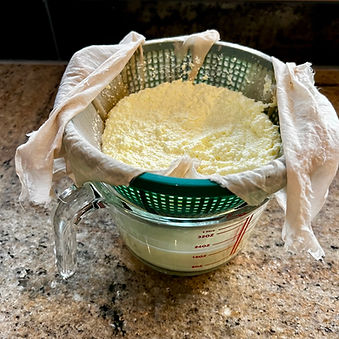
I said I would report back on the ricotta experiment so here I go. I have to say I am pretty satisfied. This is the finished result with the milky residue below. And it was so, so easy. I used Anna Jones recipe for Home-made ricotta in The Guardian. Literally all you have to do is heat up some milk with a tiny bit of salt, take it off the heat, add a precise amount of white vinegar, stir until the curds form, leave for a couple of hours, and then strain in a sieve or something that's lined with muslin. The harder you want the cheese the longer this bit will take. But for me just a few hours were enough. Does it taste OK? Yes it does - not of much in fact - well neither does real ricotta, but with a nice texture. I followed the recipe pretty closely except I had less than a litre of milk, so I topped it up with some cream which somebody else had said made the ricotta creamier. It is pretty creamy. It didn't make a lot though. Next time I shall go with Anna Jones' 2 litres. For there will indeed be a next time.
I did go with her suggestion of white vinegar rather than lemon juice though - which I had considered, because I had no white vinegar, but not only is the vinegar a more neutral taste - if you get the quantity right, but also Anna Jones said that: "I’ve tried lemon juice, but vinegar somehow produces more ricotta."
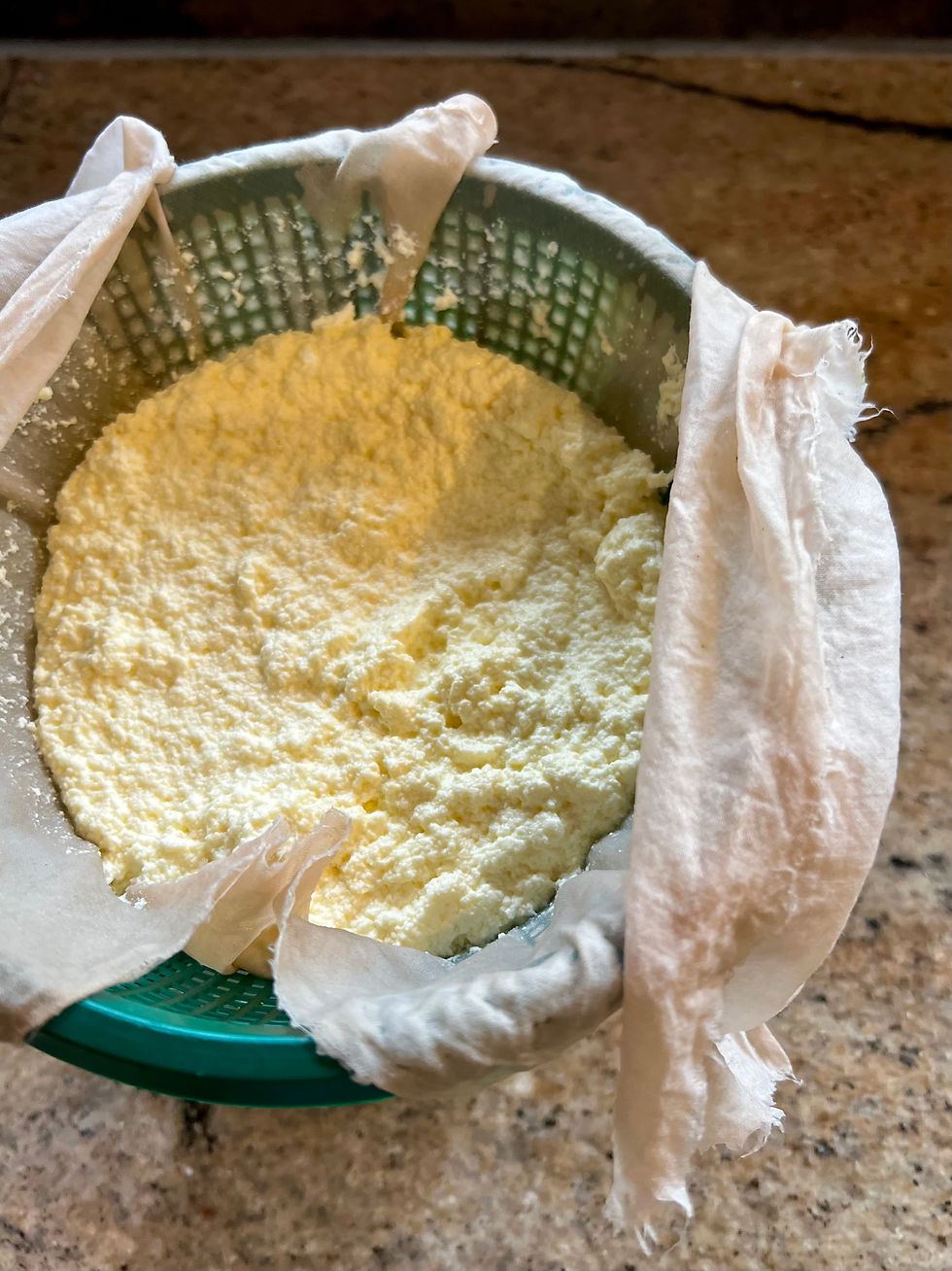
Yotam Ottolenghi describes ricotta as:
"a bit like cottage cheese, but far sexier .. with a familiar light, slightly rough, creamy texture."
And yes it does look a bit like that. Mine is actually more golden than the stuff you get at the supermarket deli.
Mind you it's not really ricotta is it? Because as Daniel Gritzer says in his article on the Serious Eats website:
"There's a basic and insurmountable problem with making ricotta at home: Unless you have whey left over from cheesemaking, you can't actually do it. It is, by definition, impossible."
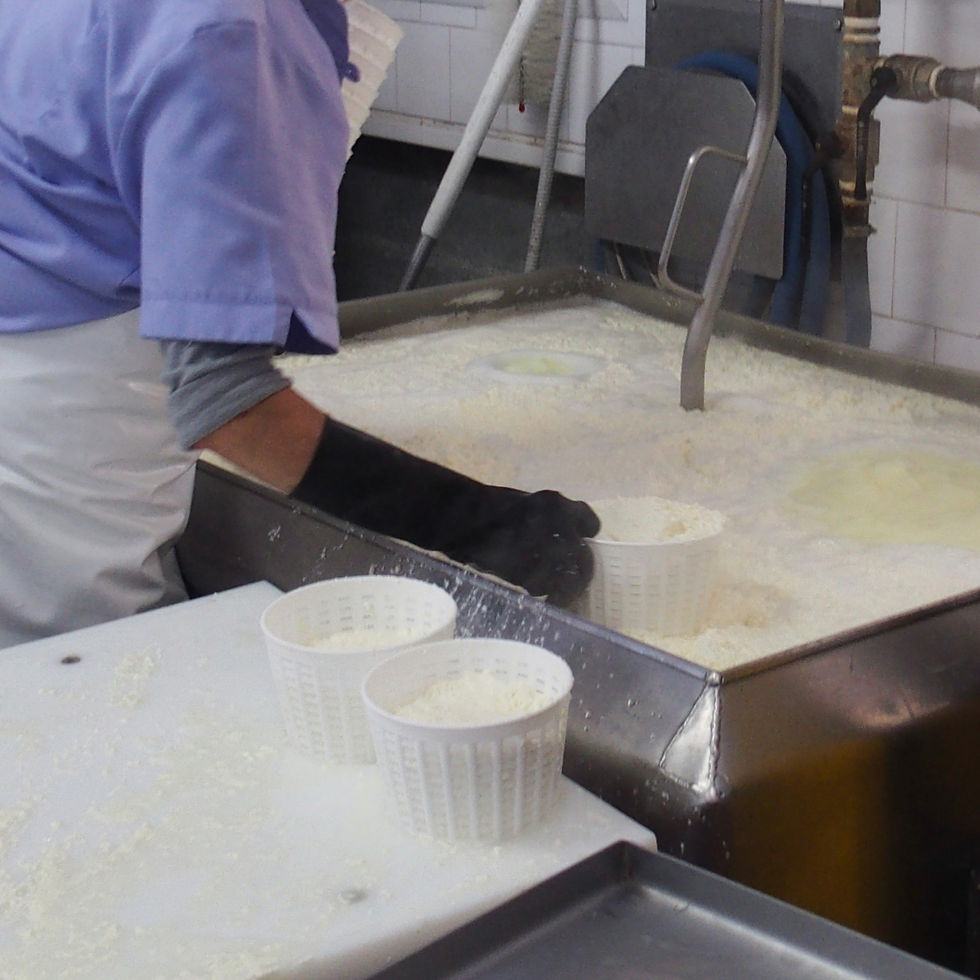
Ricotta, as I'm sure you all know is made from the whey leftover from making cheese. The word ricotta means recooked - and here is the wife in the Parmesan Reggiano making team in San Antonio, Italy - making the ricotta from the leftover whey. The whey is cooked to a particular temperature. I cannot remember whether she added any acid - apparently if you get the temperature just right the curds will happen anyway. Anyway - we bought some and it was wonderful - of course. What I have made is an imitation, but I am so very proud. And yes Nigel - it brought me joy.
However, I now have a series of problems. Not large ones, and ones about which I should not complain.

The first is what to do with the milk that has drained off. Well it's not really milk any more. People seem to think it is now whey but I'm not sure about that. Anyway I shall treat it as whey and just use it whenever I would otherwise use milk or water - cooking rice, a kind of marinade for roasting chicken, in cakes, scones, pancakes, stock... Currently it's just in a container in the fridge. So next time I have to use some kind of liquid I might use that. But question - if it is whey can it be turned into more ricotta? The implication out there is yes, but I'm not convinced. I think you can only do this with whey which is the result of having used rennet and no salt to make your cheese. The Spruce Eats - whose diagram that is above - seems to think not. Mine is 'salted whey'.
Second problem - what to actually use the ricotta for. My choices were a Skillet ravioli with spinach from Smitten Kitchen's Deb Perelman - or an old Robert Carrier recipe for an Italian spinach pie which I was going to use to lead into Robert Carrier classics one day next week. Interestingly if you type into Google - Robert Carrier Italian spinach pie, AI cameup with the recipe. The picture is not it, but something very similar. Neither of these recipes would use spinach but I chose them to consider because I still have quite a bit of silver beet and I thought that either would be a really good way to use up the last. I was even going to be better than Deb Perelman who used shop-bought ravioli, and make my own - stuffed with ricotta, parmesan and silver beet, or perhaps just ricotta and herbs, seeing as the sauce features spinach (silver beet).
I was leaning towards the pie because of a feeling of nostalgia more than anything else - and perhaps a touch of laziness - making the ravioli is a bit more fiddly. But then we organised to do the Nillumbik winery trail tomorrow ending up with coffee and cake here. So then I started looking at ricotta based cakes, and found these two - Apple and olive oil cake from Rachel Roddy and Apple, lemon and ricotta cake from Julia Busutti Nishimura. They both look great, but I'm leaning towards Rachel Roddy, mostly because she uses less ricotta, and I really don't think I have much. Not enough for both a cake and dinner tonight anyway.
There's another problem too. Both of these cakes are large and there's only four of us to eat it. Of course we can keep on eating it, but that's not good. So if I halve the quantities, what size tin do I use, and how long do I cook it for? Julia Busutti Nishimura also specifies Granny Smiths and I have none but I'm not going out to get any. I imagine other apples will be fine. I could also buy more ricotta, or buy some more milk tomorrow to make another batch of ricotta.
Problems, problems, but yes - rich lady's problems.
Maybe I'll just go and weigh the ricotta and then either abandon tart or ravioli, because I need all the ricotta for the cake, and go back to using up my chicken curry somehow - a kind of pilaf I think - or go out to the shops to buy some ricotta for the cake. I have to make the cake today. I won't have time tomorrow. Or make a different cake!
Maybe I'll just toss a coin.
YEARS GONE BY
October 16
2024 - Chop-chop
2023 - Normandy apples and cream
2022 - What was it all about?
2021 - Missing
2020 - Missing
2019 - Couscous


Comments