The price of lamb

This is actually a lucky dip post, and I shall have stuff to say about the chosen book and the chosen recipe - which you have now guessed features lamb - specifically lamb cutlets such as these.
Now this photo, found on Google Images, with the caption 'Thanks for the bargain Coles' - it was ironic - is actually old, because the lamb cutlets in this photograph were selling at $45.00 per kg. Now they are selling at $51.00. Ordinary housewives, surely cannot afford that. I have no idea what a proper upmarket butcher might be selling them for.
When we first arrived in Australia we were amazed that you could buy a whole side of lamb for 16c a kilo. And not just in the butcher shops either. The supermarkets sold them too. Of course if you buy a side of lamb it's not all good meat, and there's a fair amount of fat, but if you had grown up poor you knew what to do with the scraggy bits of breast, and the neck. Of course that was a very long time ago - 1970 probably - and inevitably the price of lamb - all meat has escalated, but not as much as from 16c to $51.00. I may have this wrong, but according to the RBA's inflation calculator $1.00 in 1970 would now be $14.58 - which is way below $51.00. Although of course that is not a fair comparison. So - against my conscience a bit - I asked AI and it says the wholesale price per kilo for a side of lamb today would be somewhere between $10 and $15 which I guess ties in with the RBA result. But that's a wholesale price. I'm not sure what the extra would be when it reaches the shopper. I do know, however, that forequarter chops - probably the cheapest lamb you can buy - are $24.00 per kilo.
Along the way I have learnt a few things to account for the rise. Setting inflation aside - the RBA figure - a dollar back then is now 14.58 dollars - perhaps the most significant figure is the number of sheep in Australia. Back in 1970 there were 170 million sheep in Australia. Now there are 70 million. And I'm guessing that a goodly proportion of those sheep are raised for wool not meat. I mean you don't see mutton in the shops these days do you? I'm guessing that back then the past it wool giving sheep were slaughtered for mutton - or maybe pet food.
Although the lack of mutton is also associated with the fact that back then Australian lamb was almost all eaten by Australians. The rest of the world was not impressed. These days again according to AI - and I think it gets this sort of thing right - 70% or so of Australian lamb is exported (much of it mutton), leaving just 30% for us - from a smaller flock. Overseas buyers pay top dollar so why would a farmer not export? Of that export market the US takes up to 39% and China 32%. And re the mutton over 90% or our mutton is exported - because, apparently we don't like mutton.
Add to that natural disasters - flood and fire - in recent years which has meant that flocks have decreased in size and those flocks have not yet been built up to previous levels. The lower prices for wool also meant that many sheep farmers have turned to crops or beef.
The last factor is the increasing cost of agriculture generally - all the extra things like food to supplement grass, machinery, packaging - I really don't know them all but whatever is required to get lamb into your supermarket, every process along the way costs more.
Is anyone ripping everybody off along the way? Possibly, maybe even probably, but also there do indeed seem to be several logical explanations for why lamb is so expensive. Not to mention the popularity of cuisines that use a lot of lamb. Maybe the farmers should turn to goats. They'll eat practically anything won't they?

It doesn't stop the abundance of recipes for lamb that we see everywhere today however, because so many cuisines in the world cook with lamb - or goat for which western recipe writers often substitute lamb.
And - finally - this is my lucky dip recipe which features those very expensive lamb cutlets - expensive and sparse - just a couple of mouthfuls of meat per chop I find.
It looks delicious though doesn't it and it's pretty simple to make - Grilled lamb chops with sumac and mint relish. The chops are coated in a paste made from onion, garlic, lemon juice and zest, cumin, corinder, sumac, salt, pepper and olive oil. A mixture which would once have been incredibly exotic but today seems - well pretty ordinary really. Or to be more polite - everyday.

Indeed it comes from the sixth section of this book - Now and Then by Tessa Kiros - the section called 'A few things I love every day'. Alas I feel the price of those cutlets would make this particular recipe a special occasion recipe rather than an everyday one. Although you could slather a shoulder of lamb with the paste and slow-cook it. That would be cheaper.
The mint relish is just mint leaves blended with ginger, green chilli, lime juice, salt and yoghurt, and the shredded salad, doesn't even have a dressing - it's just shredded fennel, cabbage, radicchio and onion.
And I didn't mention the grilled tomatoes. Really simple, perfect for a barbecue. I sound dismissive, but I'm sure it's delicious, just not everyday cheap.

It's a romantic kind of book, filled with drawings and photographs of roses, because Tessa Kiros loves them vaguely romantic words handwritten here and there. As well as photographs of her amazingly cluttered, but stylish, in that boho kind of way, kitchen.
"I am obsessed with collections. The kitchen - my favourite part of the house - is filled with tins, plates and cloths I have brough home from my travels and with them the stories.." Tessa Kiros
It shows you must be able to cook superb food in a tiny space though.
The introduction implies there will be lots of stories:
"I travel and collect things that I love. Memories, tastes, colours and stories. I bring them home and make the beautiful meals I had, so we can live them all over again."
And there is indeed a whole genre of cookery writing that dwells on the memories and stories that food evokes - both personal, historical and cultural but there are actually very few stories in this book. Each recipe does indeed have an introduction, but it's most often about why it's so good, with small tips about how to vary it, or cook it, or present it.
I'm sounding critical, but I'm not really. It's a beautifully presented book and the food is simple but delicious and just a little bit different. That's what we are all looking for is it not?
YEARS GONE BY
July 14 - Bastille Day - make yourself something French for dinner and watch the cyclists battle it out in the heat in the Tour de France.
2025 - Sfouf cake
2024 - Napoleon cake
2022 - Baklava - a request
2021 - Missing
2020 - Missing
2018 - Nothing
2017 - On holiday

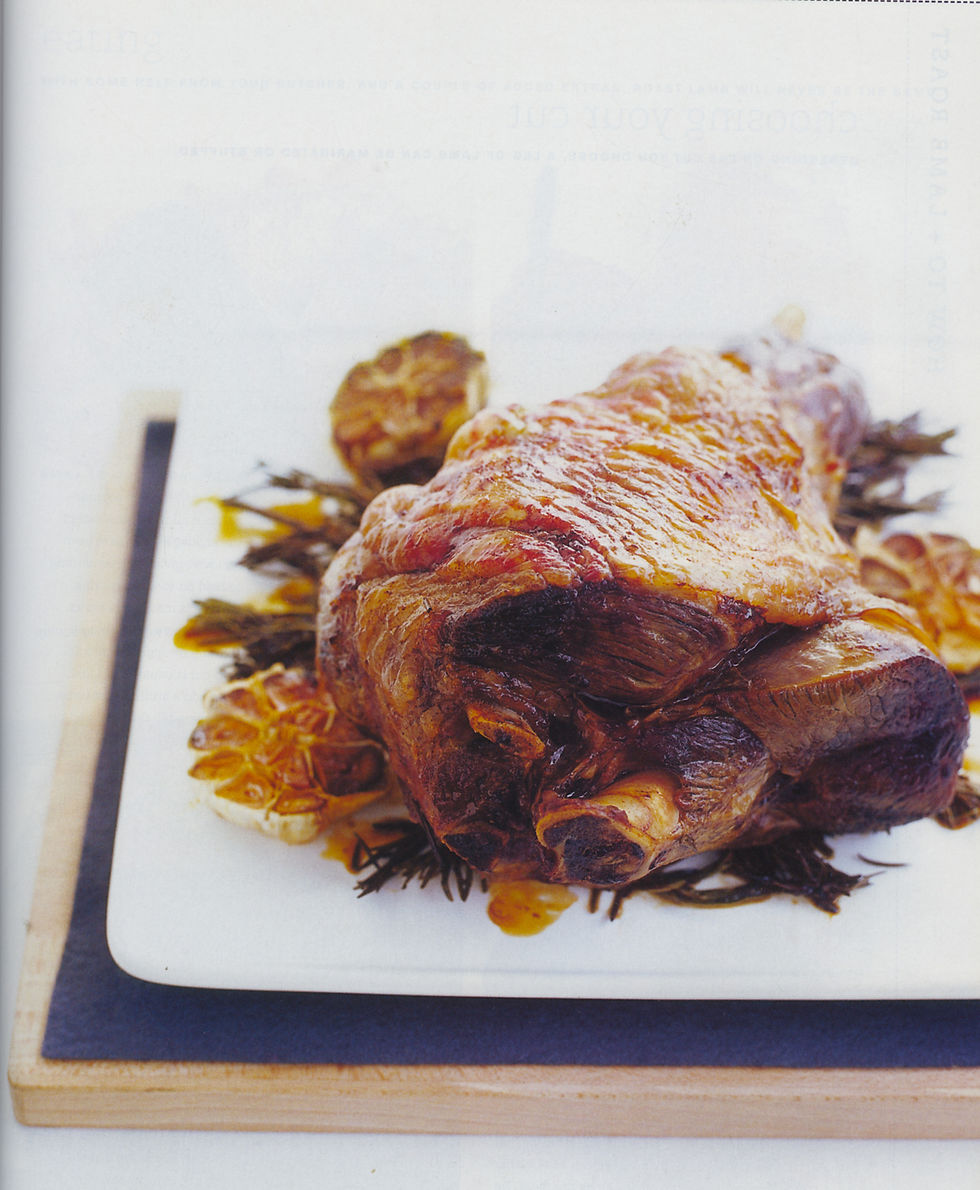

Ah I remember it well.. the side of lamb boughgt at the Prahran market.... in my lunchtime. I was just down the road at 568 or 425 St Kidaq Road (was in both at separate times in my history)/
Not a luxury then just staple food in the 197-'s and 1980's!!