Spanish-style - well any '-style'

If you have read yesterday's post, you will know that this is one of two dishes that I am currently considering for our lunch on Saturday. It's from the delicious. book More Please, by Valli Little, and for some reason I assumed that it was a Spanish dish. And so today, I was going to 'research' this Spanish dish and do one of my kind of analyses of a traditional dish.
However, when I checked my Spanish cookbooks - Claudia Roden and Robert Carrier being the authors - and also The Basque Cookbook, I found absolutely no reference to such a dish. A further ramble around the net didn't turn up much either - wel almost nothing really. Moreover, now that I have checked 'my' recipe I see there is nothing in the title or the introduction to suggest that it is at all Spanish.
The clues are there however in the list of ingredients - sherry vinegar and sherry itself, small spanish olives and smoked paprika (pimentón) and the inevitable chorizo. So, I now see, that this is why I thought it was a Spanish dish - it wasn't just me being clever. Today probably almost everyone would assume that this was Spanish - mostly because of the oh so ubiquitous chorizo.
Even so I assumed that it was indeed a version of an actual traditional Spanish dish with a proper Spanish name. (My work desktop message that scrolled across my screen all the time - put there by me - was 'Never assume'. Alas - a message we should all be aware of in life.) My assumption, I suppose was based on those ingredients - the green olives, the paprika - smoked at that, the sherry, the chorizo - and the red peppers. Although now that I think of it those ingredients (bar the sherry and the chorizo) could just as easily signal a dish from any number of different places - almost everywhere around the Mediterranean for starters - although the green of the olives is perhaps a little more restricted to particular places. Then there's Latin America, and the Caribbean as well. But then I guess those countries' cuisines are hugely Mediterranean - and in particular Spanish - well Iberian - influenced.
Perhaps the clincher was the sherry vinegar and the sherry and the chorizo. As an aside - the sherry and the sherry vinegar pairing features in one of my all-time favourite Delia dishes Chicken with sherry vinegar and tarragon sauce - which I have spoken about before. Also since we are on Delia, one of the very first dishes that bore any resemblance at all to my chosen Valli Little one was Delia's Spanish braised pork with potatoes and olives. No Spanish-style here - it's definitely Spanish although different. Here red wine is the liquid plus some actual tomatoes, rather than Valli Little's passata, and the olives are black as well as green. Plus those potatoes.

As I continued my pretty fruitless rambles I found one that was pretty close to Valli Little's recipe, which is probably because it comes from the UK delicious. site - the Australian delicious. is a spin-off from this, and I'm sure they swapped recipes now and then. There are a couple of major differences however - red wine - no sherry in sight and the addition of tomatoes, carrots, celery and capers. It also used pork steaks rather than diced pork. Maybe Valli Little had changed her mind as well, although which came first I do not know - although the UK site does not acknowledge that it is her recipe. But then food editors or directors or recipe writers don't always get the acknowledgement they deserve - or else it's in tiny print somewhere - as in the Coles Magazine where they appear in pale and tiny print along the fold of the page.

The next closest that I found was from an Australian pork producer Bruemar with their Spanish-style pork with chorizo and peppers. They also favour pork steaks - their own which are flavoured with garlic and honey the red peppers, green olives and tomatoes - no further liquid required, and some tinned beans. Which I came to realise - well I knew already really - were another typical Spanish ingredient. And they went for the Spanish-style thing in their title as well. I guess because they knew that this was not an 'authentic' Spanish dish that the Spanish would get all hot under the collar about. Or would they?

My last example is not Spanish, or even Spanish-style - but Provençal - Easy Provençal pork stew (French pork stew with tomatoes, peppers, and herbs) from a website called Pardon Your French, whose author tells us:
"Cooking a “Provençal-style” meat or fish means you’ll almost always find tomatoes, garlic, olive oil, Herbes de Provence, olives and summer vegetables like bell peppers or zucchini."
So very similar to Spanish-style, but the crucial ingredient here is the Herbes de Provence - just one ingredient that marks it as Provençal.
'Almost always' is a significant phrase here, because as with any '-style' dish it is unlikely that the inhabitants of the country in question add these characteristic ingredients to every dish they make. Chorizo and sherry vinegar are not in every Spanish dish. Herbes de Provence are not in every Provençal dish - and those other 'typical' ingredients are found everywhere else that has had a similar cultural history and geographic setting and climate. Climate determines what you can grow and culture determines what you do with those products.
In today's cooking world, we have absorbed cuisines from just about everywhere, and incorporated them into our home cuisines - our home cooking. The supermarket magazines are full of dishes from just about everywhere, with adjustments to the more familiar anglo palate. They are not 'authentic' which is why '-style' is often added to the descriptor. We do not want to claim authenticity - unless the recipe comes from an actual native of that cuisine - possibly out of sheer politeness, but also possibly as a hook to get you to feel that you are eating something exotic. To make you feel adventurous.
That wonderful foodie series on SBS that Maeve O'Mara hosted - Food Safari - always began in a shop that specialised in the cuisine of that week's focus - with a rundown of what were the ingredients that enabled you to call something '-style' - or authentically of that cuisine. Often there were ingredients that you might find in virtually every cuisine in the world - onions spring to mind, the various meats we all know, tomatoes perhaps, but there were also ingredients that you might recognise, because of our increasing knowledge of other cuisines, and increasingly occasionally things that were totally new to you. In the case of Spain - the most recent might be the sherry vinegar, the chorizo and the smoked paprika. The things that mark it out from other Mediterranean cultures.
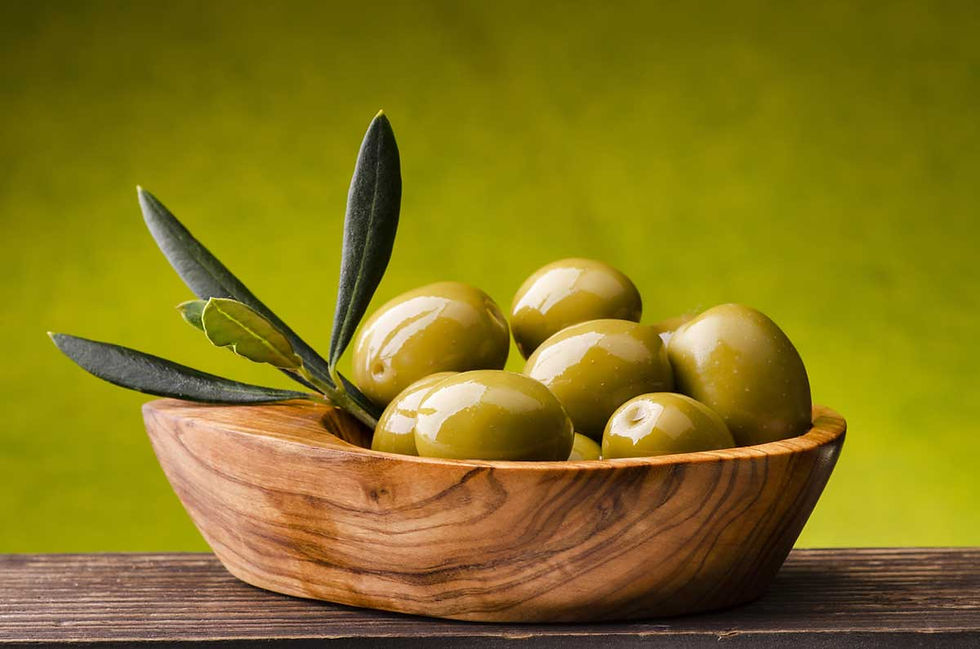
There are also the subsets of ingredients - as these Manzanilla olives which are a specifically Spanish olive. You can get them here, but you pay more, and so you will go Spanish-style rather than authentically Spanish. There are other specific olives of course, and each country has their own. As with other things such as the wine, the tomato, the ham, the cheese. To a stickler for the authentic or the immigrant who wants to be reminded of home, they might be essential. To everybody else we will go for the substitute - the easily available or the cheaper, or if we aspire to 'authenticity' the nearest relation to the 'real thing.

As I mentioned yesterday my other possible main dish is also Spanish-style, even though Valli Little actually describes this as 'Spanish'. A quick look at Claudia Roden's scholarly book on the cooking of Spain confirmed what I thought - that they stuff roast chickens with all sorts of things - often various kinds of fruit. Which is perhaps where Valli Little got her idea for the quince paste gravy. Of course there is chorizo but really - it's not Spanish - it's Spanish-style - as described by Google's AI
"Spanish-style" stuffed chicken is a highly popular and widely celebrated culinary crossover globally. These adaptations use signature Iberian ingredients to elevate the classic roast chicken"
'To elevate the classic roast chicken' says it all really. Somewhat frightening that it comes from AI.
Does anyone ever say British-style? I don't think so. But as far as Spain goes - I think it won't be proper Spanish-style without chorizo. Everything else comes from elsewhere. Although whether all Spaniards cook with chorizo is another question entirely - that I cannot answer here. They probably eat Spaghetti bolognaise - maybe with chorizo in with the meat.
YEARS GONE BY
June 4
2022 - Duxelles - a first recipe
2021 - Missing
2020 - Missing
2018 - A bag of olives - help!
2017 - Nothing - away on holiday for the entire month


Hi there sis,
A scholarly article about authentisity!! I don't really remember what we had to eat when I visited my Spanish penfriend all those years ago, they were a Catalan family who spoke Catalan in the house and the only dishes I remeber were salt cod and tortillas. Returning to Spain just before Covid came, the food was varied, lots of fish, simply fried, salads, all sorts really but this was from Andalucia, a totally different part of Spain.
Sherry Vinegar sounds tempting, as does the Spanish title. Look forward to Saturday 😜